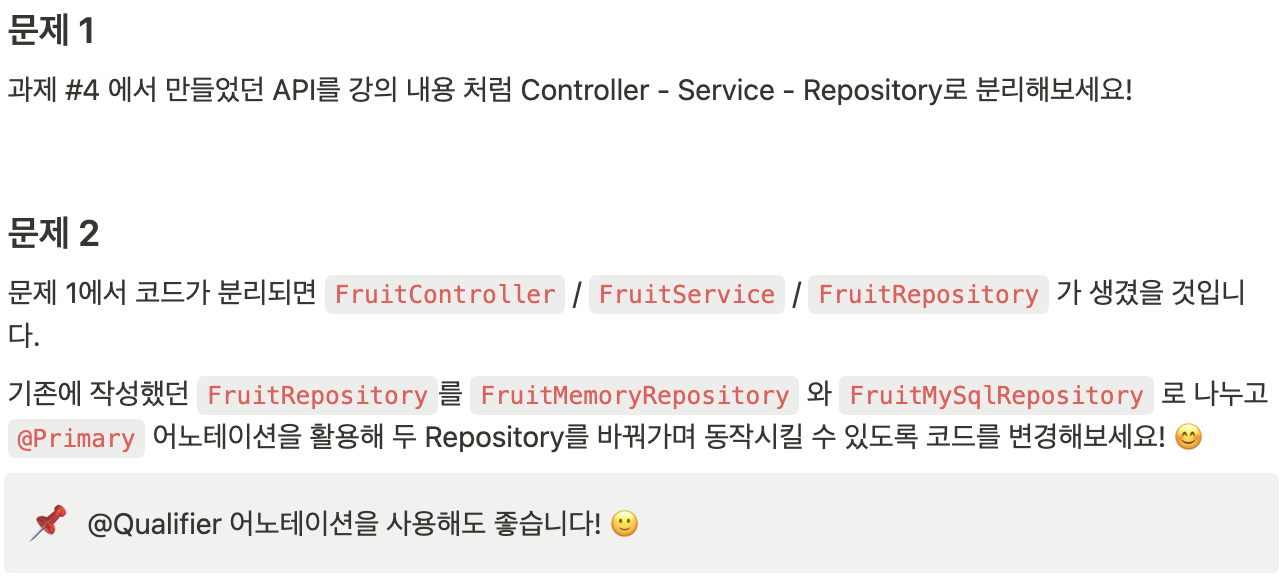
우리는 스프링 컨테이너의 개념을 배우고, 기존에 작성했던 Controller 코드를 3단 분리해보았습니다. 앞으로 API를 개발할 때는 이 계층에 맞게 각 코드가 작성되어야 합니다! 🙂
과제 #4 에서 만들었던 API를 분리해보며, Controller - Service - Repository 계층에 익숙해져 봅시다! 👍
@RestController
public class FruitController {

    private final FruitService fruitService;

    public FruitController(FruitService fruitService) {
        this.fruitService = fruitService;
    }

    @PostMapping("/api/v1/fruit")
    public void saveFruit(@RequestBody Ex4FruitCreateRequest request) {
        fruitService.saveFruit(request);
    }

    @PutMapping("/api/v1/fruit")
    public void updateFruit(@RequestBody Ex4FruitSoldRequest request) {
        fruitService.updateFruit(request);
    }

    @GetMapping("/api/v1/fruit/stat")
    public Ex4FruitSalesAmountResponse statFruit(@RequestParam String name) {
        return fruitService.statFruit(name);
    }
}
@Service
public class FruitService {

    private final FruitRepository fruitRepository;

    public FruitService(FruitRepository fruitRepository) {
        this.fruitRepository = fruitRepository;
    }

    public void saveFruit(Ex4FruitCreateRequest request) {
        fruitRepository.saveFruit(request.getName(), request.getWarehousingDate(), request.getPrice());
    }

    public void updateFruit(Ex4FruitSoldRequest request) {
        if (fruitRepository.isFruitNotExist(request.getId())) {
            throw new IllegalArgumentException();
        }
        fruitRepository.updateFruit(request.getId());
    }

    public Ex4FruitSalesAmountResponse statFruit(String name) {
        if (fruitRepository.isFruitNotExist(name)) {
            throw new IllegalArgumentException();
        }
        return fruitRepository.statFruit(name);
    }
}
@Repository
public class FruitRepository {

    private final JdbcTemplate jdbcTemplate;

    public FruitRepository(JdbcTemplate jdbcTemplate) {
        this.jdbcTemplate = jdbcTemplate;
    }

    public void saveFruit(String name, LocalDate warehousingDate, long price) {
        String sql = "INSERT INTO fruit (name, warehousingDate, price) VALUES (?, ?, ?)";
        jdbcTemplate.update(sql, name, warehousingDate, price);
    }

    public boolean isFruitNotExist(long id) {
        String readSql = "SELECT * FROM fruit WHERE id = ?";
        return jdbcTemplate.query(readSql, (rs, rowNum) -> 0, id).isEmpty();
    }

    public void updateFruit(long id) {
        String updateSql = "UPDATE fruit SET is_sold  = true WHERE id = ?";
        jdbcTemplate.update(updateSql, id);
    }

    public boolean isFruitNotExist(String name) {
        String readSql = "SELECT * FROM user WHERE name = ?";
        return jdbcTemplate.query(readSql, (rs, rowNum) -> 0, name).isEmpty();

    }
    public Ex4FruitSalesAmountResponse statFruit(String name) {
        String salesSql = "SELECT sum(price) FROM fruit WHERE is_sold = true GROUP BY name HAVING name = ?";
        String notSalesSql = "SELECT sum(price) FROM fruit WHERE is_sold = false GROUP BY name HAVING name = ?";

        long salesAmount = jdbcTemplate.queryForObject(salesSql, long.class, name);
        long notSalesAmount = jdbcTemplate.queryForObject(notSalesSql, long.class, name);

        return new Ex4FruitSalesAmountResponse(salesAmount, notSalesAmount);
    }
}